Eugene has always leaned green — it's part of what makes this community distinct. From the food co-ops to the city's urban growth boundary policies, there's a genuine commitment here to building and living in ways that make sense long-term. When that ethic gets applied to home construction and renovation, the results are homes that are more comfortable, cheaper to operate, and better positioned for the future. Sustainable building in the Pacific Northwest isn't abstract idealism — it's practical engineering for a specific climate.
Why Efficient Building Makes Practical Sense in Eugene
The Willamette Valley's climate is moderate but damp. You're not fighting extreme heat or extreme cold, but you're dealing with persistent moisture and a long heating season. Older homes in Eugene — and there are many — were often built before modern insulation standards, and they show it in their utility bills. Newer construction and major remodels are an opportunity to build homes that actually perform well in this environment.
- Oregon's climate zone rewards good insulation and air sealing more than flashy renewable technology
- Moisture management is the most important building science issue in the Willamette Valley
- A well-sealed, well-insulated home reduces heating and cooling loads before you even think about equipment
- Eugene's winters are mild enough that heat pumps work well here, unlike colder climates where they struggle
ADUs: Inherently Efficient by Design
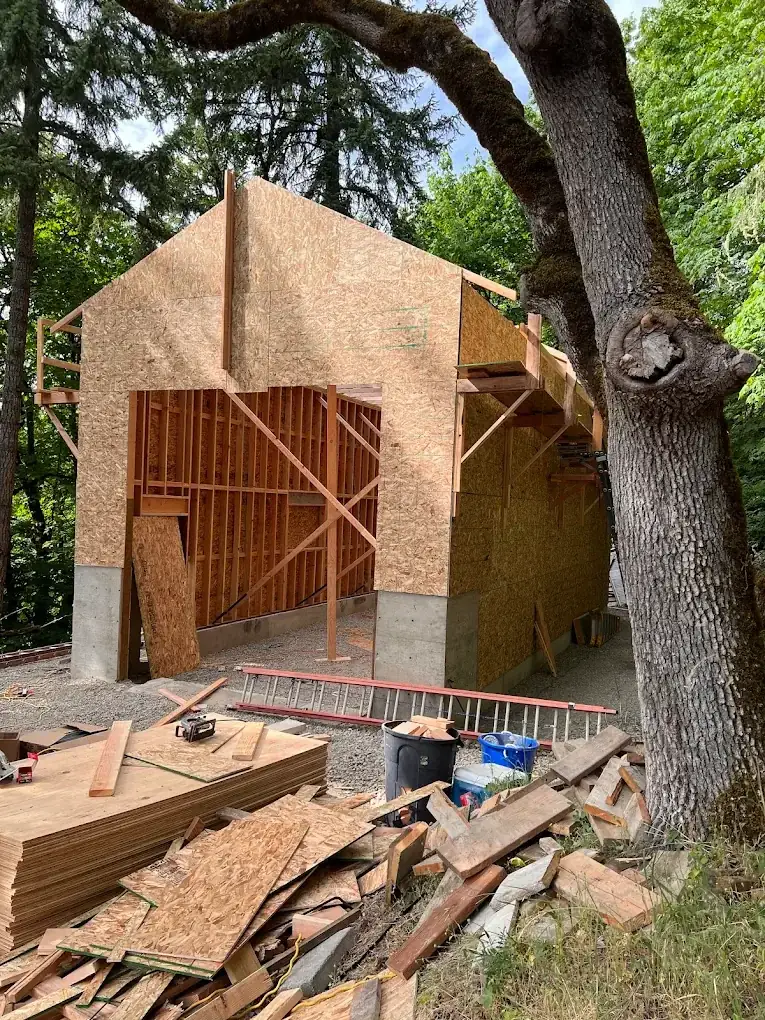
Accessory dwelling units are, almost by definition, a more resource-efficient housing type than a full single-family home. Less square footage means less energy to heat and cool, less material to build with, and a smaller footprint on the land. When you build an ADU with energy efficiency in mind, you amplify those inherent advantages significantly.
- A well-insulated 600–800 sq ft ADU can be heated for a fraction of what a standard home costs
- Mini-split heat pumps are the right choice for ADU climate control — efficient, quiet, and no ductwork required
- Heat pump water heaters use roughly 60% less energy than standard electric resistance units
- LED lighting throughout, properly wired and switched, is now cost-effective enough that there's no reason not to
- A well-oriented ADU that captures passive solar gain in winter and is shaded in summer performs better before any active systems kick in
In Eugene, adding an ADU also means adding housing supply in a tight market — which has its own kind of community benefit. The city's ADU-friendly zoning policies reflect that understanding.
Insulation and Air Sealing: The Foundation of Green Building
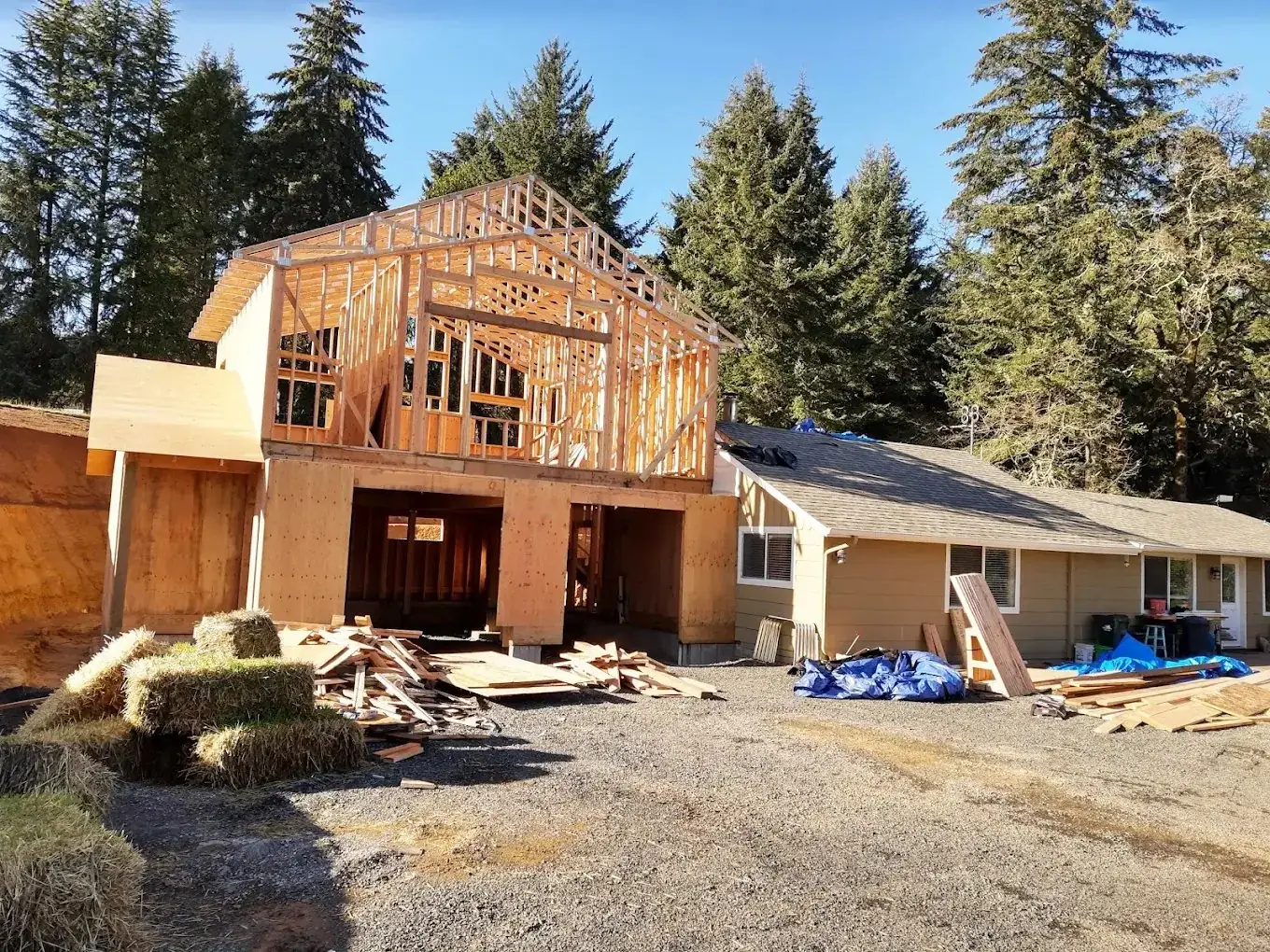
This isn't the glamorous part of sustainable construction, but it's the most important. You can install solar panels and a geothermal heat pump and still have a poorly performing home if the building envelope leaks air and loses heat through inadequate insulation. The sequence matters: seal and insulate first, then right-size your mechanical systems accordingly.
- Spray foam insulation in rim joists and other hard-to-reach areas eliminates significant infiltration paths
- Continuous exterior insulation, when possible during a remodel, stops thermal bridging through framing
- A blower door test reveals where air is leaking before you close up the walls — a small investment with meaningful payback
- Proper vapor management in Oregon's climate means understanding which walls need to breathe and which need barriers
Smart Material Choices for the Pacific Northwest
Sustainable building isn't just about energy systems — it's also about choosing materials that perform well in this environment over time. A material that requires frequent replacement, treatment, or repair isn't particularly green regardless of what it's made from.
- Fiber cement siding holds up to Oregon's moisture far better than wood and requires minimal maintenance
- Engineered lumber products are more dimensionally stable than solid wood in a humid environment
- Metal roofing lasts 50+ years and handles the Willamette Valley's rain load exceptionally well
- Locally sourced materials, when available, reduce embodied carbon and transportation costs
- Low-VOC finishes, paints, and adhesives improve indoor air quality — relevant anywhere, but especially in a tight, well-insulated building
Solar Ready, Even If You're Not Installing Now
Rooftop solar is an increasingly popular addition in Eugene, and Pacific Power's net metering program makes it genuinely economically viable for many households. You don't have to install solar at the time of an addition or ADU build, but designing the project to be solar-ready — with proper roof orientation, adequate structural capacity, and conduit run to the electrical panel — makes future installation cheaper and cleaner.
- South-facing roof slopes at 30–45 degrees are optimal for Oregon's latitude
- Running conduit from the roof to the main panel during construction costs very little and saves significant labor later
- A main panel sized for future EV charging and solar integration avoids an expensive service upgrade down the road
Financing Green Upgrades
Energy-efficient improvements often have favorable financing options. Federal tax credits for heat pumps, heat pump water heaters, and insulation have been expanded. Oregon's Energy Trust offers rebates on efficient equipment. And for larger projects like ADUs, financing programs like HFS Financial can cover up to 120% of project cost — meaning you can build the efficient version of the project, not a compromised version constrained by upfront cash.
- Federal residential clean energy credits apply to qualifying heat pumps and water heaters
- Energy Trust of Oregon rebates are available for many efficient HVAC and water heating upgrades
- Eugene Water & Electric Board (EWEB) sometimes offers additional incentives for efficiency improvements
If you're thinking about an ADU, a remodel, or an addition and want to talk through how to build it efficiently — not just for the environment but for your utility bill and long-term comfort — we'd love to have that conversation. Reach out for a free consultation at (541) 515-3843 or email [email protected]. We build in Eugene, Springfield, and throughout Lane County.
Thinking about a project?
Bari will look at your lot and give you an honest estimate — free, no pressure.
Begin Your Project →