
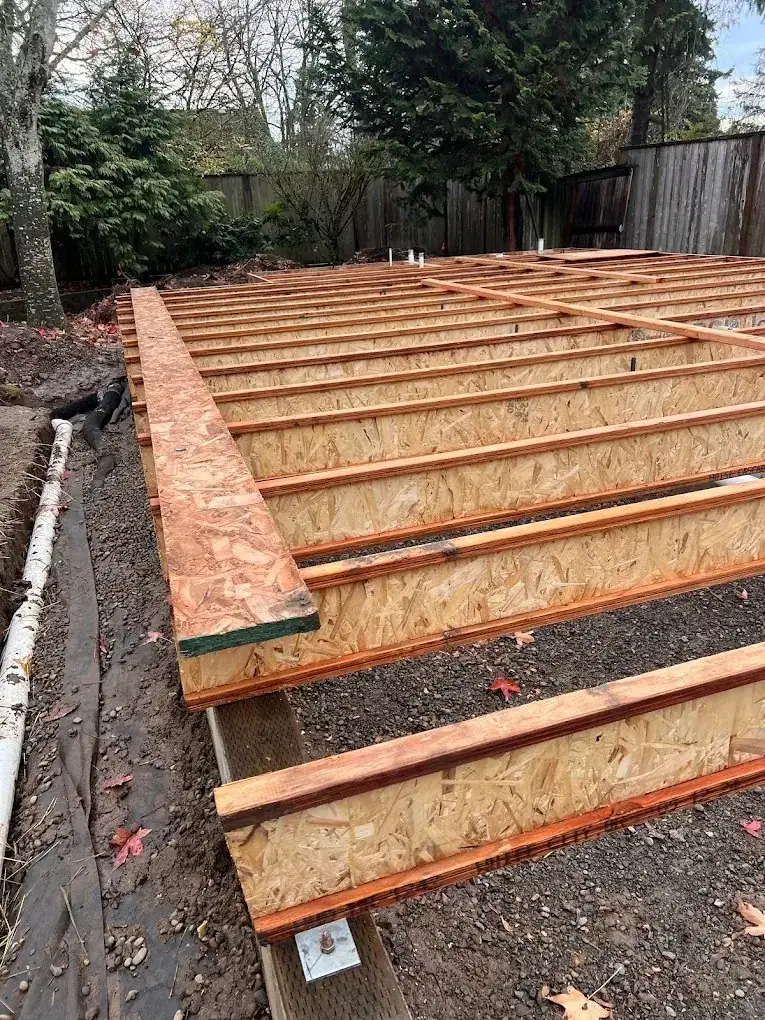
Building a custom home is one of the largest decisions most people ever make. Getting the sequence right—before you've spent a dollar on design or committed to a lot—can save you from expensive mistakes and months of frustration. Here's a practical checklist to walk through before anything else happens.
Step 1: Set a Realistic Budget
Start with the number you're actually comfortable spending—not a wish, but a real ceiling. Then work backwards to understand what that budget can build in the Eugene area today. Construction costs in Lane County have shifted significantly over the past several years, and what a budget bought in 2018 is different from what it buys now.
Your total budget needs to account for more than sticks and framing:
- Land acquisition (if you don't already own the lot)
- Site preparation: clearing, grading, utility connections
- Design and engineering fees
- Permit and system development fees
- Contingency—typically 10–15% of construction cost
- Landscaping and finish work after construction
A free consultation with a local contractor early in this process gives you realistic numbers before you've made irreversible decisions.

Step 2: Understand Your Lot (or Find the Right One)
Not all lots are equal, and the differences matter financially. Before committing to a piece of ground, look carefully at:
- Zoning: What can you legally build? Does the lot allow a single-family home, an ADU, or both?
- Topography: A sloped lot means more site prep and potentially a more expensive foundation.
- Soil conditions: Poor soil can require deeper footings or engineered solutions.
- Utilities: Is the lot served by city water and sewer, or will you need a well and septic system? In Lane County, that's a significant cost difference.
- Setbacks and buildable area: Lot size on paper and buildable footprint after setbacks can be very different numbers.
Have a contractor or civil engineer walk the lot before you close on it. The cost of that consultation is trivial compared to discovering a problem after purchase.
Step 3: Sort Out Financing Before You Design
One of the most common mistakes in custom home planning is getting deep into design before locking in financing—then discovering the approved loan doesn't match the project scope. Know your financing structure first.
Options typically include construction loans (which convert to a permanent mortgage), owner-builder loans, and specialty lenders. Red Umbrella works with HFS Financial, which offers project financing up to 120% with no home equity or appraisal required—a useful option for additions and ADUs especially. Talk to a lender early and get pre-approval or a realistic approval range before you spend money on plans.
Step 4: Define Your Program Before You Design
Before you hire a designer or architect, write down what you need the house to do. How many bedrooms? Do you need a home office or a dedicated workspace? Is single-story important? Any accessibility requirements now or in the future? Do you want the option to add an ADU later?
A clear program—even just a page of notes—makes design more efficient and prevents expensive revisions when the architect discovers mid-project that you actually needed that extra bathroom. It also helps your contractor give you a more accurate preliminary estimate earlier.
Step 5: Understand the Permit Process in Eugene
Building a custom home in the City of Eugene requires a building permit, and depending on your lot and project, potentially additional approvals: land use review, stormwater management plans, tree removal permits, or system development charge assessments. The timeline for permit review in Eugene can range from a few weeks to several months depending on project complexity and current department workload.
Plan for this in your schedule. If you're hoping to break ground in spring, your plans need to be submitted in the fall. A contractor who regularly builds in Lane County will give you an honest read on current timelines.
Step 6: Choose Your Contractor Early
Many homeowners treat contractor selection as the last step—something you do once the plans are finished. In practice, bringing a general contractor in early pays off. An experienced local contractor can:
- Flag constructability issues in the design before they become costly revisions
- Give you real cost feedback as the design develops, not a surprise after final plans are stamped
- Advise on materials and systems based on what actually performs well in Eugene's climate
- Help you phase the project if budget constraints require it
When you're evaluating contractors, verify their Oregon CCB license, ask for proof of current liability and worker's comp insurance, and talk to them about their experience with the specific type of project you're planning. A contractor who has built custom homes in Eugene knows this market, these soils, and these inspectors.
Step 7: Build in a Realistic Timeline
From lot purchase through move-in, a custom home build typically runs 12–24 months when you account for design, permits, and construction. Expecting it to happen faster almost always leads to compromises you'll regret. Build your timeline with buffer, and communicate openly with your contractor about schedule priorities.
Red Umbrella serves Eugene, Springfield, and all of Lane County. If you're in the early stages of planning a home build or major addition, a free on-site consultation is the right next step. Call Bari at (541) 515-3843 or contact us here—we'll give you honest answers and realistic numbers from the start.
Thinking about a project?
Bari will look at your lot and give you an honest estimate — free, no pressure.
Begin Your Project →